
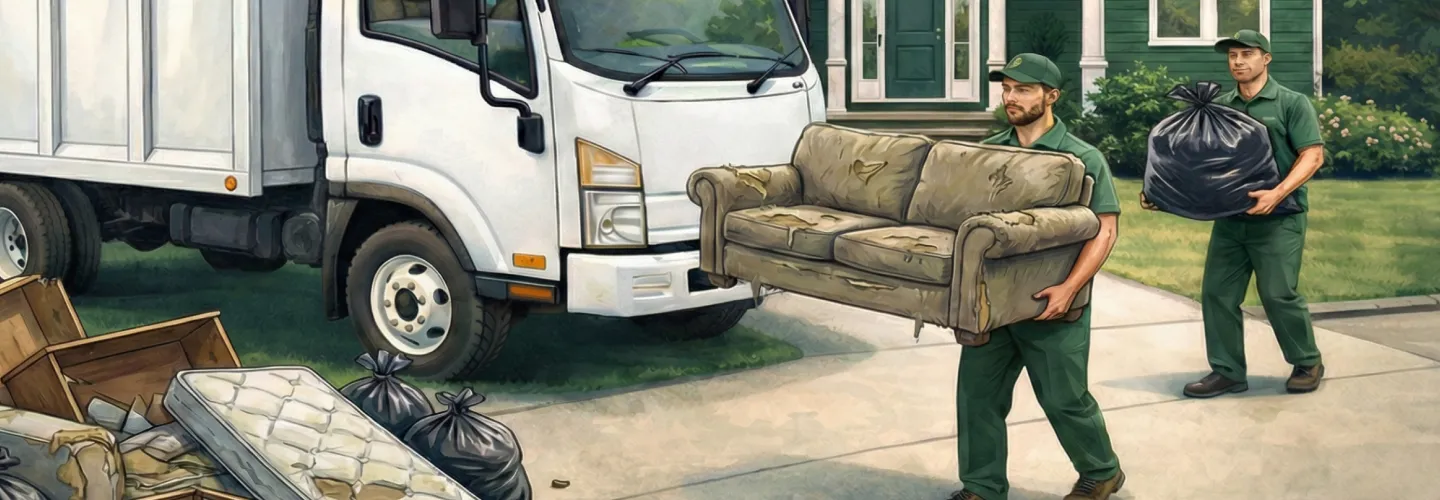
Weymouth Regular Trash Pickup Services
Choose our Regular Trash Pickup for dependable, on-time service that keeps your home clean and your schedule worry-free—enjoy hassle-free waste management from a team you can trust.
Get a Free QuoteOur Weymouth Junk Removal Services
Regular Trash Pickup in Weymouth, MA – Local Service Guide
Regular trash pickup in Weymouth, MA is essential for maintaining clean, safe neighborhoods like South Weymouth and Jackson Square. Residents often schedule pickups during spring cleanouts, after storms, or when replacing large items such as mattresses or appliances. For residential items, options include donating usable furniture, recycling electronics, or arranging curbside disposal—timing can depend on weather and access, especially in areas with narrow streets or heavy tree coverage. Garage, basement, and attic cleanouts are common after flooding or during seasonal yard maintenance, with yard waste collection peaking in fall and spring. Commercial properties in Weymouth Landing and along Route 18 require tailored solutions for offices, restaurants, and retail spaces, often needing discreet, high-frequency pickups to manage larger volumes. Specialty services, like dumpster rentals or estate cleanouts, are vital for construction, hoarding, or foreclosure scenarios, requiring careful planning and coordination with local guidelines. For more on local rules and schedules, visit the official Weymouth city website.
Key Considerations for Regular Trash Pickup in Weymouth
- Timing pickups around local schedules and weather events
- Securing permits for large or specialty disposals
- Using approved disposal and recycling channels
- Ensuring clear access for collection vehicles
- Managing volume and category-specific requirements
- Coordinating with city resources for specialty or high-volume needs
Benefits of Regular Trash Pickup in Weymouth
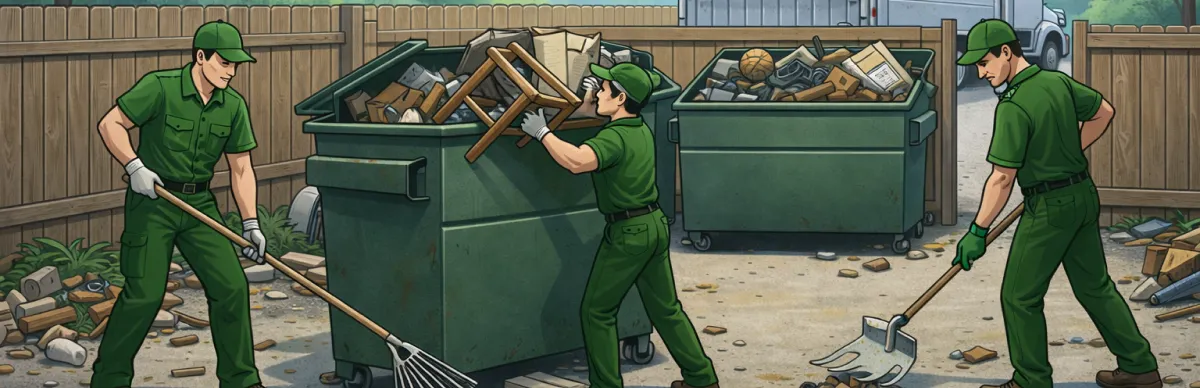
Consistent Waste Removal
Improved Neighborhood Cleanliness
Reliable Scheduling
Eco-Friendly Disposal Practices
Time and Effort Savings
Enhanced Property Value
Coordinating Regular Trash Pickup with Weymouth’s Department of Public Works
Weymouth’s Department of Public Works (DPW) oversees regular trash pickup for residential and commercial properties, ensuring compliance with local and state waste management regulations. Weekly curbside collection is provided for household waste, with collection days varying by neighborhood. Residents must place trash at the curb by 7:00 AM on their scheduled day, using city-approved containers. The DPW enforces a strict limit of three 32-gallon barrels or bags per household per week, and all containers must have secure lids to prevent litter. Bulk item pickup, such as furniture or appliances, requires advance scheduling and may incur additional fees. The city operates a transfer station at 120 Winter Street, open Monday through Saturday from 7:30 AM to 3:30 PM, where residents can dispose of excess waste for a fee (minimum $10 per load).
- Weekly curbside collection by DPW
- Three 32-gallon barrel/bag limit per household
- Bulk item pickup by appointment only
- Transfer station access with resident ID
- Secure lids required on all containers
Department of Public Works
120 Winter Street, Weymouth, MA 02188
Phone: (781) 337-5100
Official Website: Department of Public Works
Understanding Weymouth’s Solid Waste Regulations and Environmental Compliance
Weymouth enforces strict solid waste regulations to promote environmental stewardship and public health. The city prohibits the disposal of hazardous materials, electronics, yard waste, and construction debris in regular trash. Residents must comply with Massachusetts’ landfill bans, which include items such as CRT monitors, mercury-containing products, and certain appliances. Recycling is mandatory for paper, cardboard, glass, and plastics, with single-stream recycling collected biweekly. Violations of waste separation rules may result in fines or refusal of service. The city participates in the state’s annual Household Hazardous Waste Day, allowing safe disposal of paints, chemicals, and batteries. For more information on state landfill bans and recycling mandates, consult the Massachusetts Department of Environmental Protection.
- Hazardous waste and electronics banned from regular trash
- Mandatory recycling of paper, cardboard, glass, plastics
- Biweekly single-stream recycling collection
- Fines for improper disposal or contamination
- Annual Household Hazardous Waste Day for special items
Massachusetts Department of Environmental Protection
Boston, MA
Phone: (617) 292-5500
Official Website: Massachusetts Department of Environmental Protection
Accessing Weymouth’s Transfer Station: Permits, Fees, and Accepted Materials
Weymouth’s transfer station at 120 Winter Street provides residents with a convenient option for disposing of excess household waste, bulky items, and select recyclables. Access requires proof of residency, such as a driver’s license or utility bill. The facility is open Monday through Saturday, 7:30 AM to 3:30 PM, and charges a minimum fee of $10 per load, with higher rates for large or commercial loads. Accepted materials include household trash, furniture, mattresses, and appliances (with refrigerant removed). Prohibited items include hazardous waste, electronics, tires, and yard waste. Residents must separate recyclables from trash and follow posted signage for material drop-off. For a full list of accepted items and current fee schedule, visit the Weymouth DPW website.
- Proof of residency required for access
- Open Monday–Saturday, 7:30 AM–3:30 PM
- Minimum $10 fee per load
- Separate recyclables from trash
- No hazardous waste, electronics, or tires accepted
Department of Public Works
120 Winter Street, Weymouth, MA 02188
Phone: (781) 337-5100
Official Website: Department of Public Works
Material Handling and Safety Standards for Regular Trash Pickup in Weymouth
Proper material handling is essential for safe and efficient trash collection in Weymouth. Residents must ensure that all waste is securely bagged and placed in sturdy, lidded containers to prevent spillage and animal access. Heavy or oversized items should be broken down or bundled, not exceeding 50 pounds per container. Hazardous materials, including paint, solvents, and batteries, are strictly prohibited in regular trash and must be disposed of at designated hazardous waste events. The city’s code enforcement officers monitor compliance and may issue citations for improper disposal or unsafe placement of waste. For questions about safe disposal practices or to report violations, contact the Weymouth Code Enforcement office via the city’s main website.
- Securely bag all waste; use lidded containers
- Limit container weight to 50 pounds
- No hazardous materials in regular trash
- Bundle or break down large items
- Report violations to Code Enforcement
Code Enforcement
75 Middle Street, Weymouth, MA 02189
Phone: (781) 340-5000
Official Website: Code Enforcement
What Neighborhoods Do We Serve Throughout Weymouth, MA?
- Weymouth Landing: This historic district features older homes with narrow driveways and limited curb space, requiring careful placement of trash containers and early set-out times for collection.
- South Weymouth: Predominantly single-family residences with ample curb frontage, making standard trash pickup straightforward. Residents should ensure containers are not obstructing sidewalks.
- East Weymouth: A mix of multi-family buildings and small businesses, where shared collection points and higher waste volumes necessitate strict adherence to container limits and recycling rules.
- North Weymouth: Coastal properties and compact lots often face wind exposure, so secure lids and weighted containers are recommended to prevent litter.
- Jackson Square: Commercial and residential mix with busy streets; businesses must coordinate with DPW for bulk pickups and comply with commercial waste regulations.
- Old Spain: Characterized by older multi-unit dwellings and limited parking, requiring residents to coordinate container placement and avoid blocking access for collection vehicles.
- Union Point: Newer developments with HOA guidelines; residents should verify any additional restrictions on container types and placement to ensure compliance with both city and association rules.